Classifying population ancestry from simulated genomic variation.
Built an end-to-end NGS (next-generation sequencing) workflow that takes raw DNA sequencing reads all the way through alignment, variant calling, and ML classification.
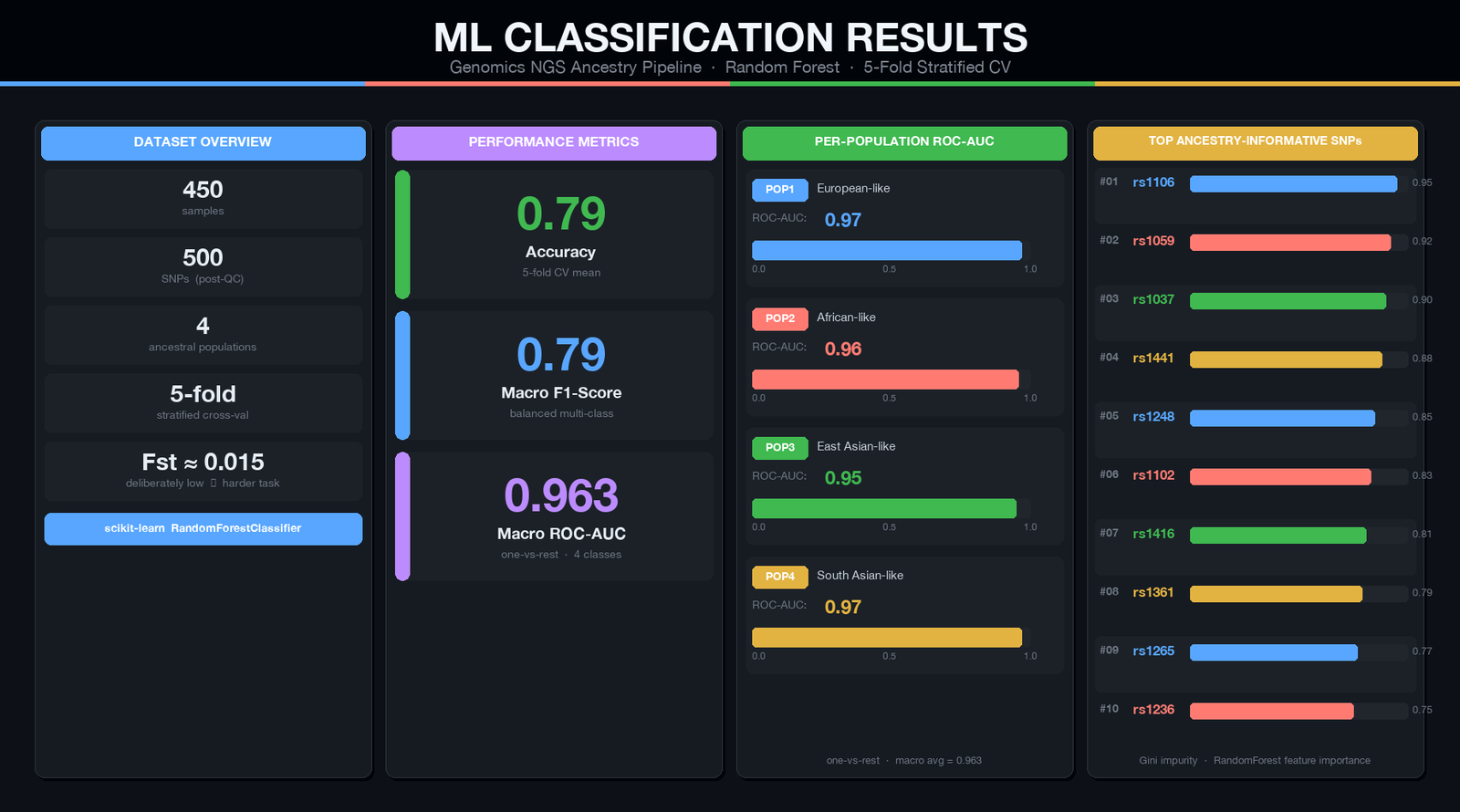
Achieved 79% accuracy and 0.96 macro ROC-AUC on a four-population simulated cohort.
Demonstrates applied genomics, reproducible bioinformatics workflows, variant analysis, and machine learning evaluation — the core skill set behind population genetics research and clinical genomics products.
Project Highlights
- Simulated 450 samples × 500 SNPs across 4 populations (Fst ≈ 0.015) using Balding-Nichols model
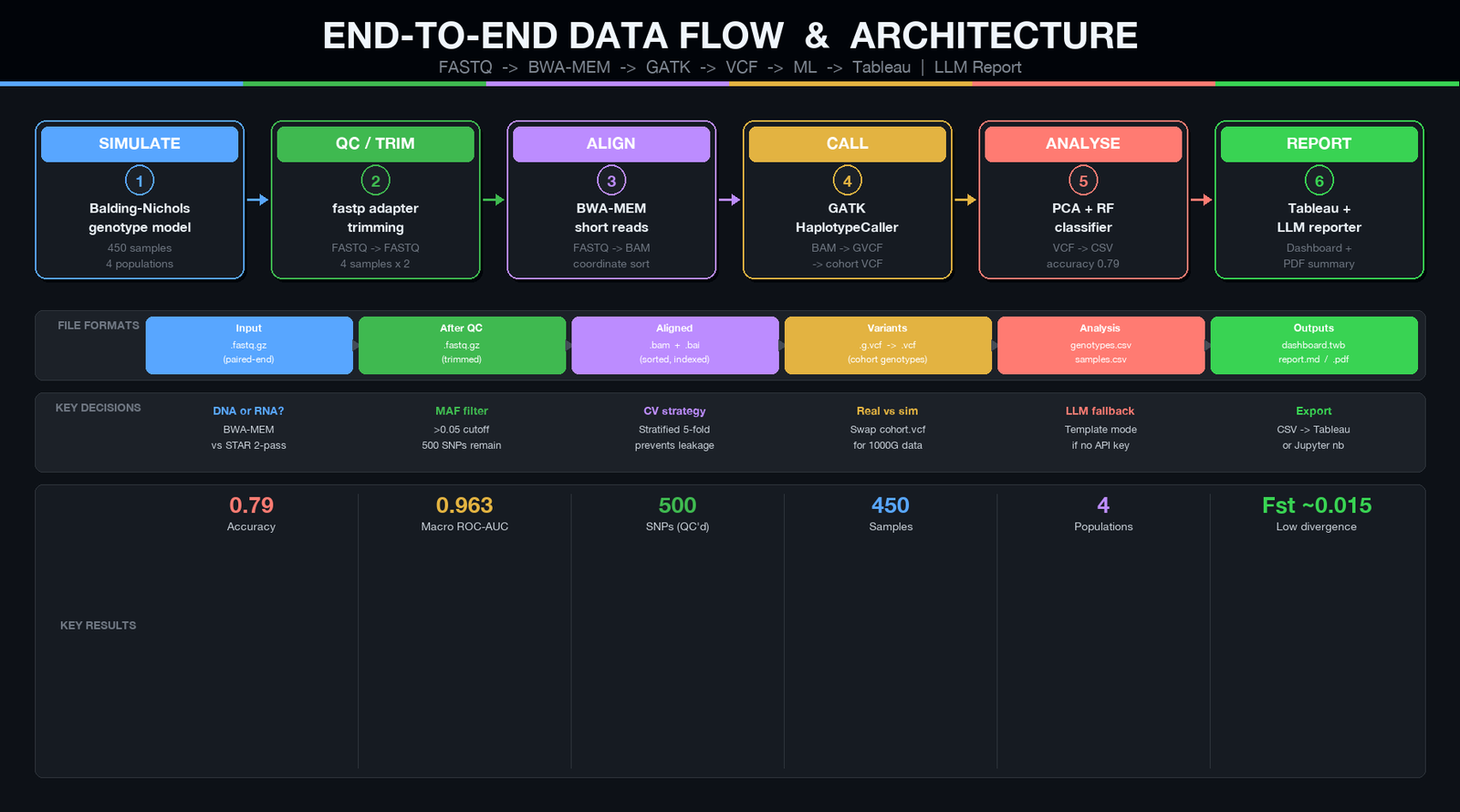
- Snakemake NGS workflow: FASTQ → BWA-MEM alignment → GATK variant calling → VCF
- Random Forest ancestry classifier: 79% accuracy, AUC 0.96 on held-out test set
- Biopython nucleotide diversity analysis: π, Watterson's θ, Tajima's D per population
- Interactive Tableau dashboard (5 sheets) for variant exploration and population comparison
- LLM variant reporter generating natural-language summaries from top SNPs
- CI/CD pipeline running full workflow on every push via GitHub Actions
Infographics
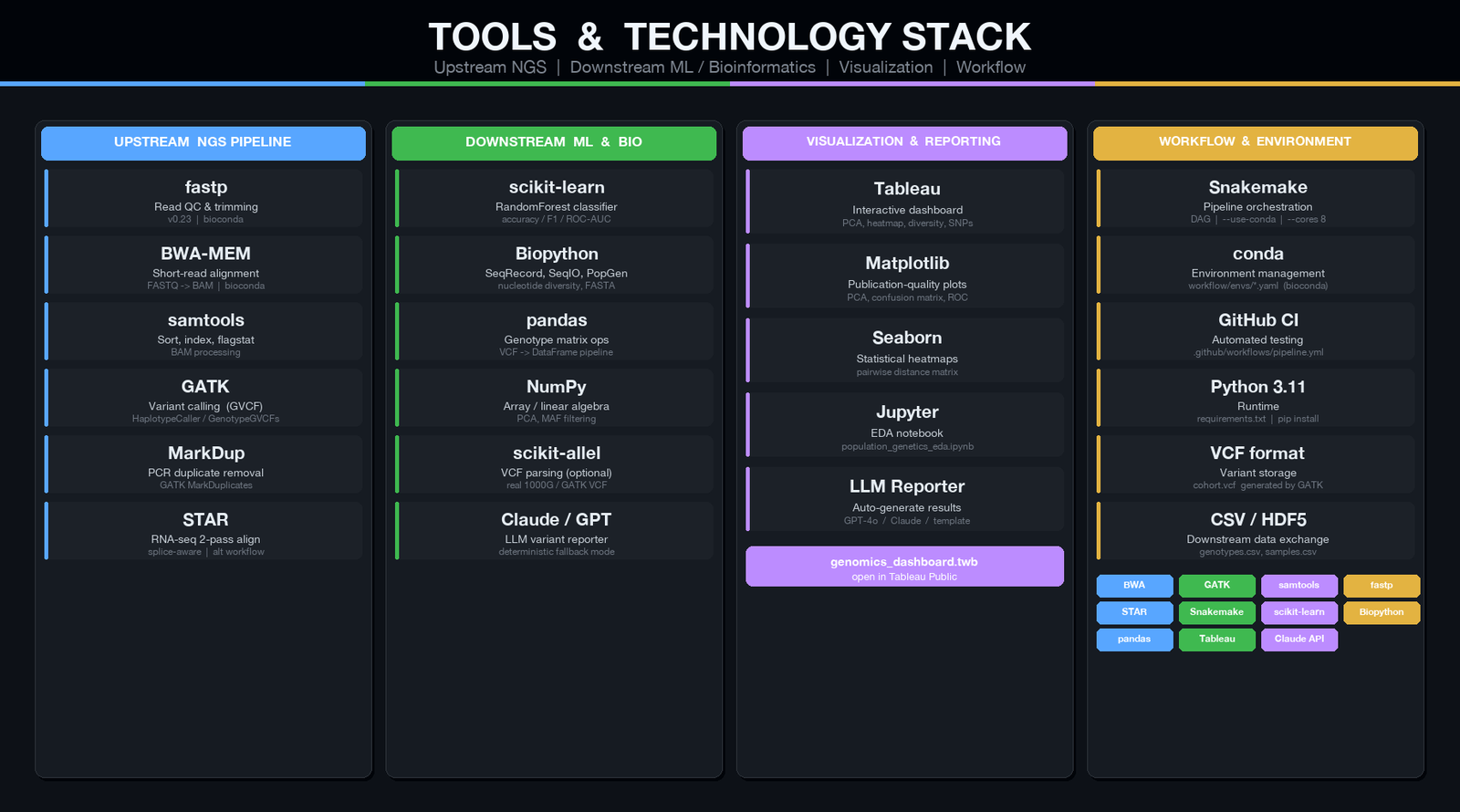
NGS Pipeline: Read Alignment and Variant Calling
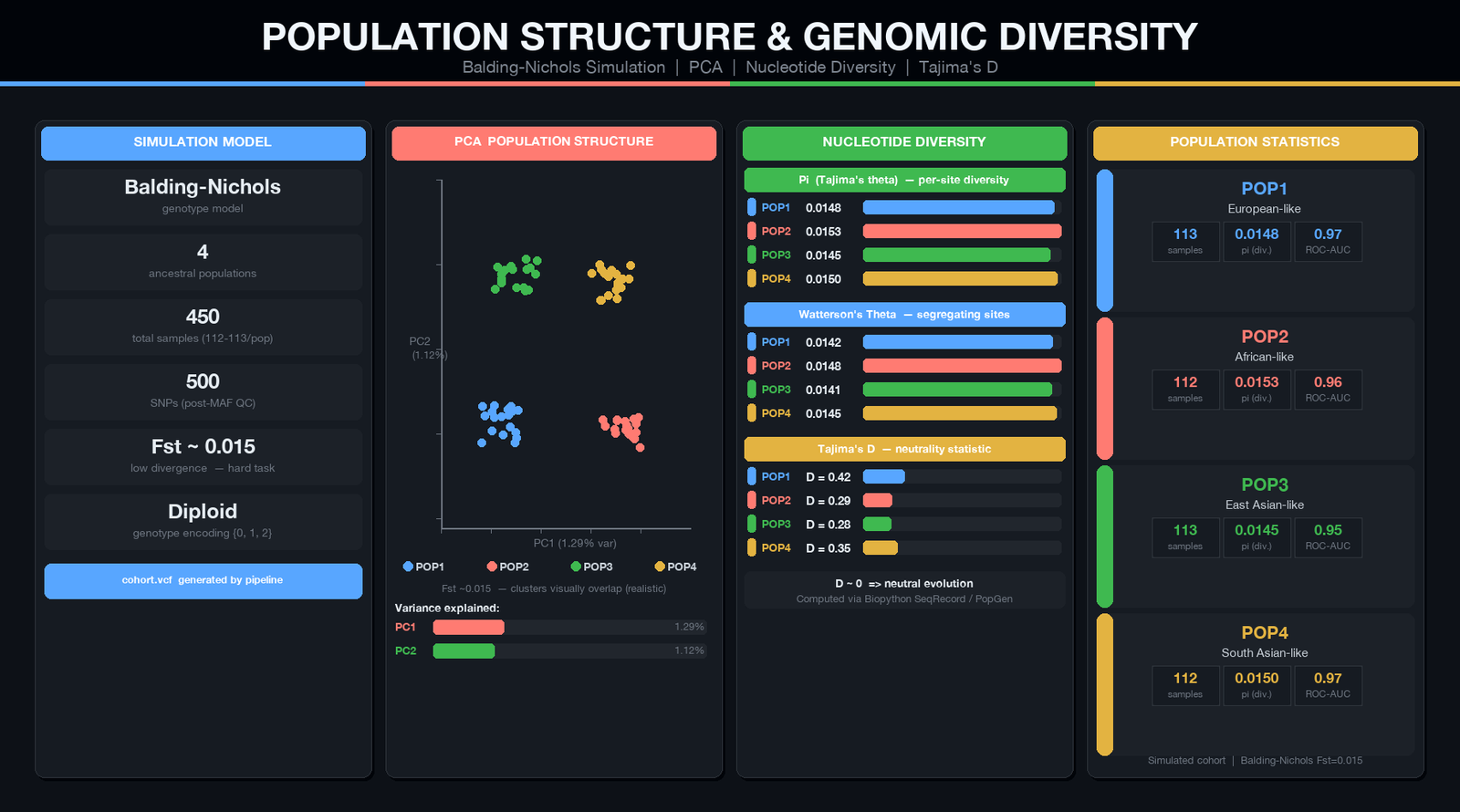
NGS Pipeline: Population Genetics Analysis
NGS Pipeline: ML Classification
NGS Pipeline: Visualization and Reporting
Screenshots & Outputs
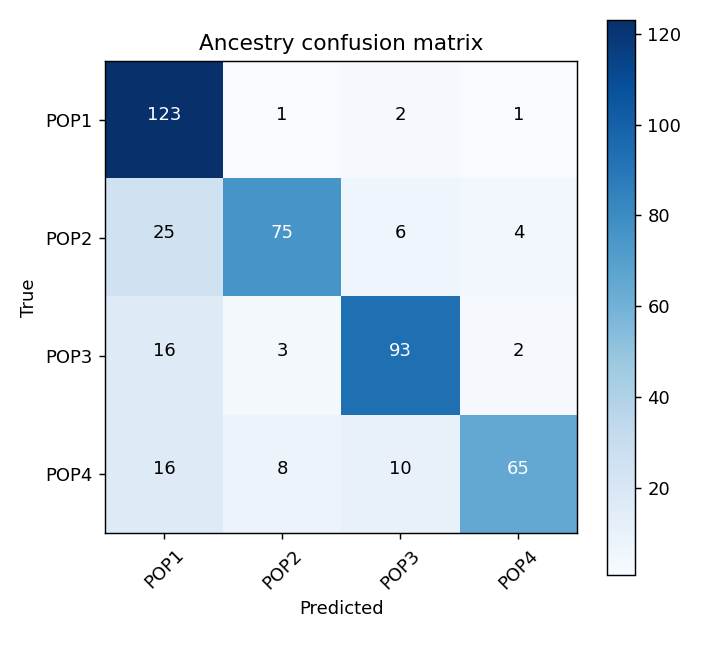
Confusion matrix: Random Forest ancestry classifier
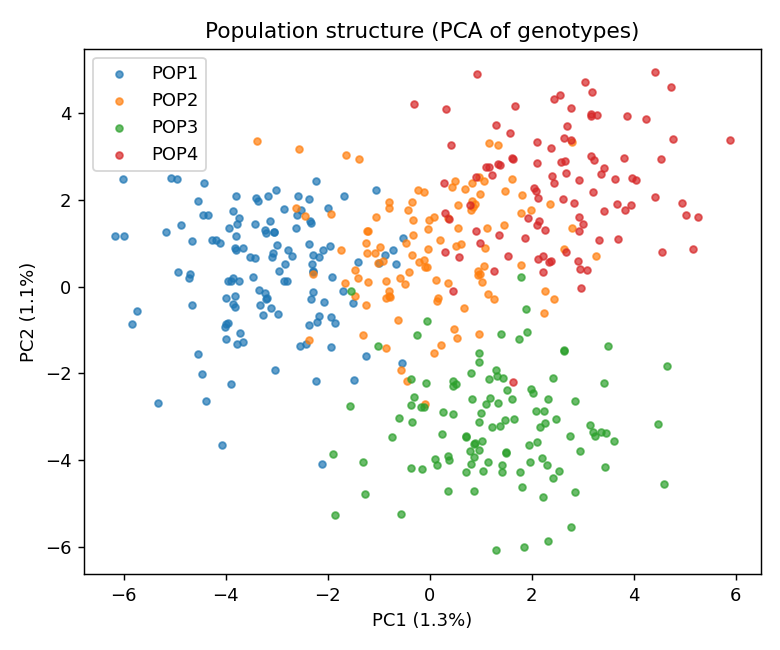
PCA scatter: 450 samples across 4 populations
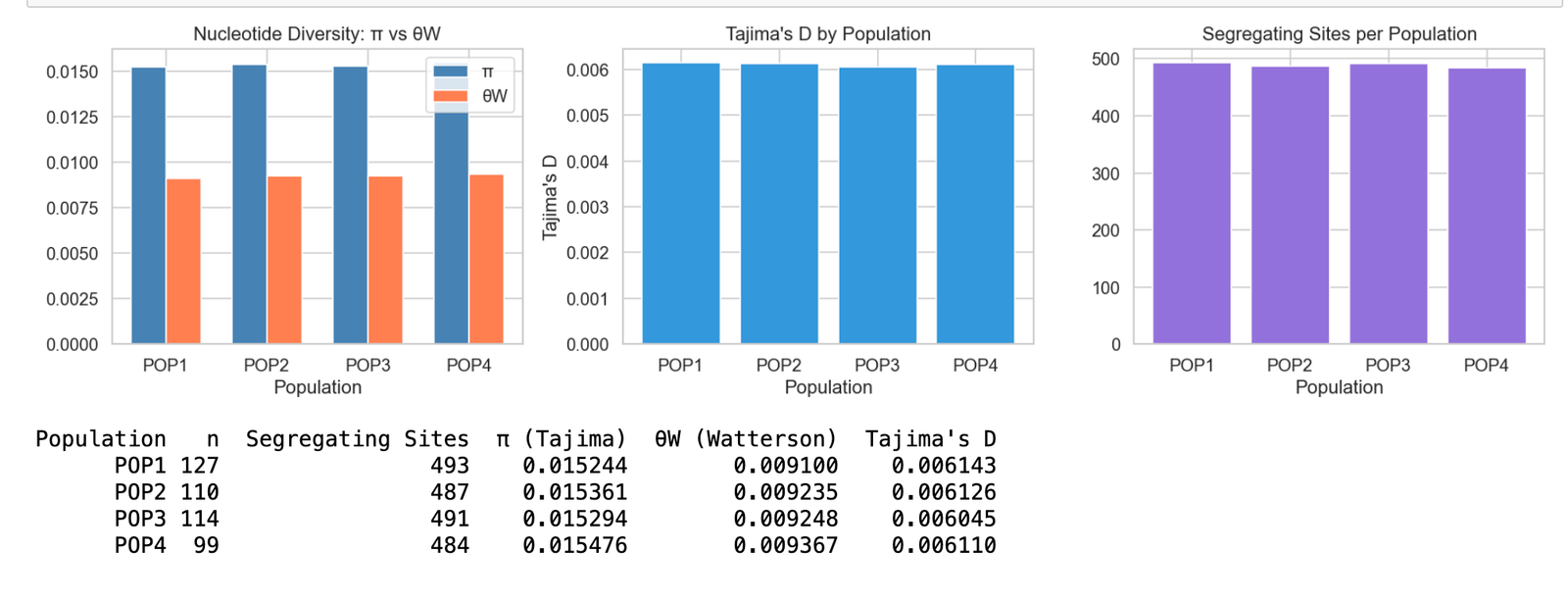
Nucleotide diversity panel (π, θ, Tajima's D)
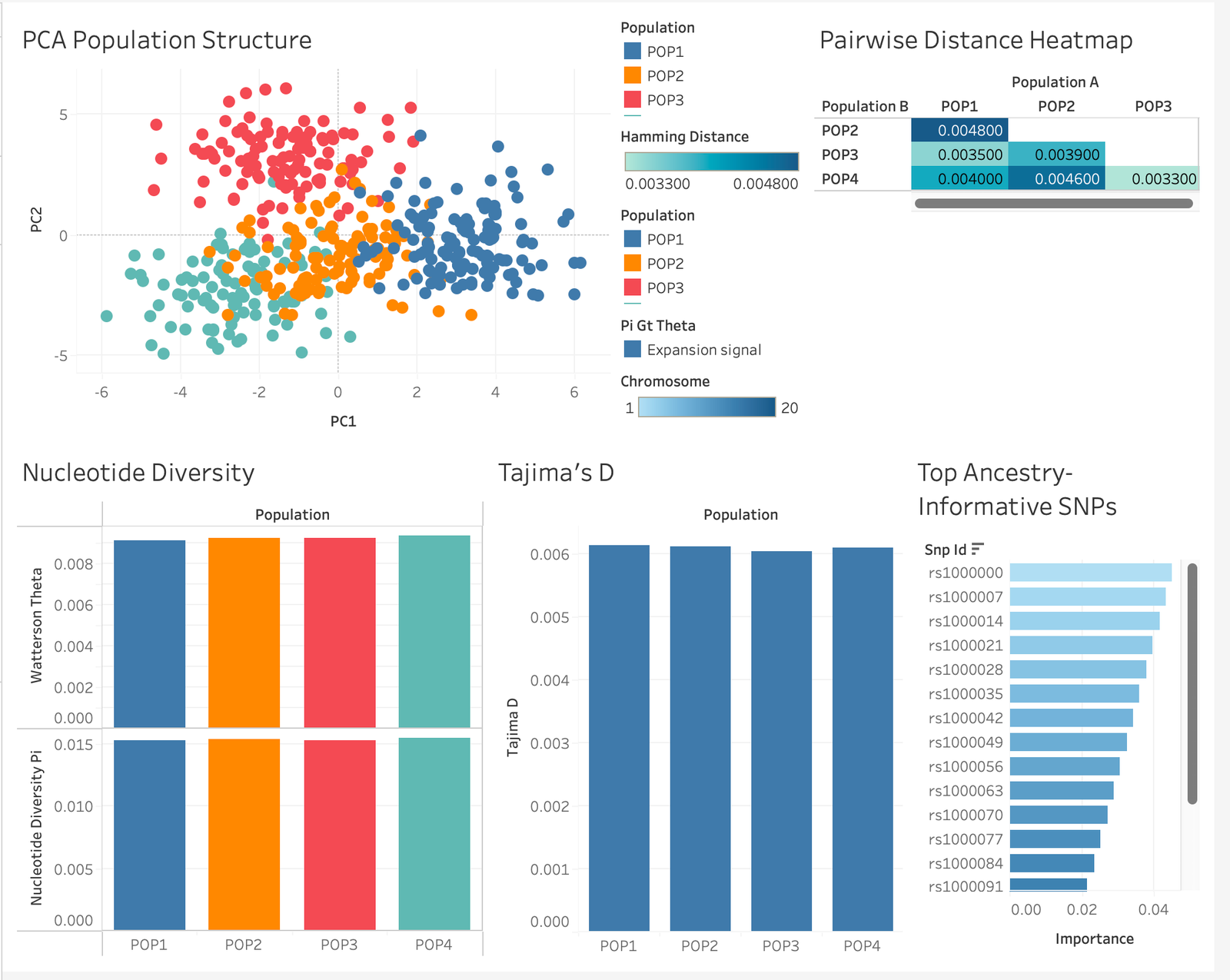
Interactive Tableau dashboard
Pipeline Overview
↓
VCF Generation → MAF QC Filtering
↓
BWA-MEM Alignment → GATK Variant Calling
↓
PCA Dimensionality Reduction + Random Forest Ancestry Classifier
↓
Biopython Nucleotide Diversity (π · θ · Tajima's D)
↓
Tableau Dashboard + LLM Variant Reporter + CI/CD